Submitted by Emy, A Pro-Choice NC Campus Leader
Reproductive freedoms and reproductive health care have presented legislative issues since the 19th century, when the legal system determined reproductive healthcare to be a legal matter. The “first statutory abortion regulation” came into being in 1821 in Connecticut in an effort to bar abortions after the first movement of the fetus, and control the distribution of contraceptives. Legislative limitations on reproductive freedoms continued throughout the century. In 1873, the Comstock Act was passed by the United States Congress, making it a “federal crime to sell or distribute contraception through the mail or across state lines.” In 1965, the United States Supreme Court determined that marital privacy rights are protected by the Constitution, which revoked Connecticut’s contraception ban for married people. This decision also introduced the question of privacy and an individual's right to privacy, which was paramount to future decisions regarding reproductive healthcare and freedoms.
Large advancements regarding reproductive healthcare blossomed in the 1970s when four states (Alaska, Hawaii, New York, and Washington) legalized abortions for all women within their states. Only three years later, abortion became legal nationwide in the landmark case Roe v. Wade, in which the Supreme Court ruled “that a woman’s right to an abortion is protected under the U.S. Constitution’s 14th Amendment.” This ruling was monumental for reproductive rights, as it found that “a woman has full rights to an abortion in the first trimester…” Roe v. Wade continued to be altered and argued until the 2022 ruling in Dobbs v. Jackson Women’s Health Organization overturned Roe v. Wade. The Supreme Court’s ruling left abortion laws up to the states and concluded that the United States Constitution does not protect the right to abortive procedures.
Reproductive freedom, and consequently the lack of said freedom, is intrinsically connected to a number of other systemic issues, such as women’s rights, the right to privacy, the underrepresentation of marginalized communities, and medically underserved areas. Prior to Roe v. Wade, abortions were still being performed, but the criminalization of the procedures forced them underground. This resulted in many abortions being performed in unsafe environments and often by unqualified individuals. This also resulted in incredibly high death rates among women getting abortions. Botched abortions were determined to be the cause of death for “2,700 women in 1930 — almost one out of every five (18%) of recorded maternal deaths that year.” These underground abortions were often very expensive, meaning that only individuals with certain means had the option to search out reproductive health care procedures. Abortion became far safer and more accessible with the legalization of abortion in New York, Hawaii, Alaska, and Washington, but the issue of accessibility was very much still present. The legalization of abortion in these states led to the end of many underground abortions, as people had the opportunity to have a safe and legal abortion. Barrier to access still existed, however, as many individuals, often those from marginalized communities, did not have the means to travel to other states for abortion care.
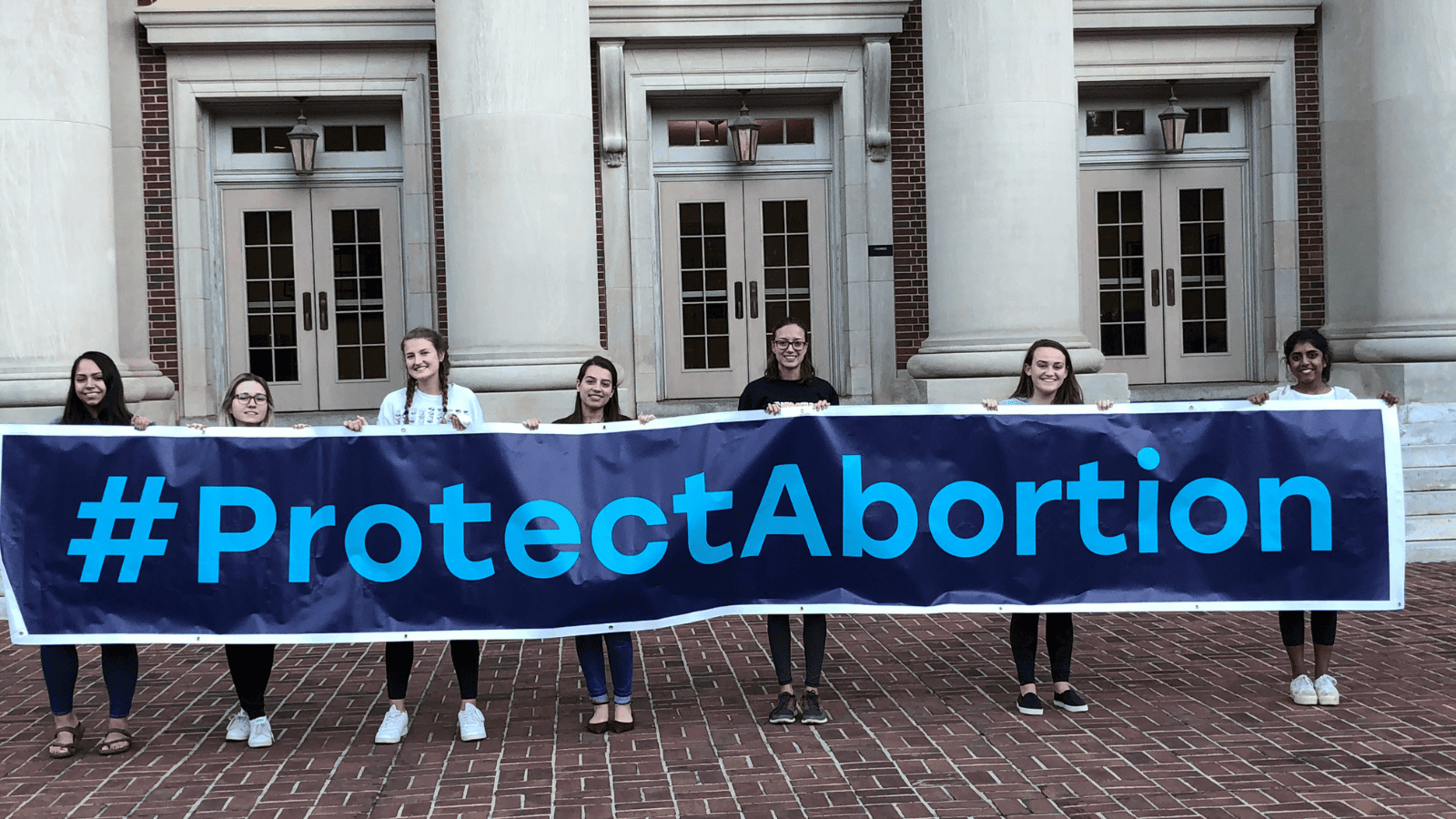
The issue of reproductive freedom is also frequently discussed in conjunction with the right to privacy and the 14th Amendment, more specifically, the section of the 14th Amendment dealing with the right to equal protection. In Roe v. Wade, it was determined that an individual's choice to have an abortion was a question of privacy, which is protected by the United States Constitution. It was this determination that helped to create the system that we live in, “whereby Americans expect to make certain reproductive decisions without undue government interference.” The United States Congress found that “generations of American women have relied on the fact that they have the freedom to make such choices as a matter of fundamental personal right,” and with the ruling in Dobbs v. Jackson Women’s Health Organization, “[t]he Supreme Court has reversed five decades of jurisprudence…concluding that questions related to the legality of abortion services are a matter for legislative action rather than constitutional protection.”
Senate Bill S.317 - Reproductive Freedom for All Act (2023-2024), also known by its short title Reproductive Freedom for All Act, focused on providing individuals with access to fair and equitable reproductive health care, freedom regarding reproductive health, and the action of making decisions regarding reproductive health without government interference. This bill, had it passed, would have ensured rights to individuals regarding reproductive freedom and health care which are consistent with the fundamental verdicts presented by U.S. Supreme Court rulings such as Griswold v. Connecticut (381 U.S. 479 (1965)), Eisenstadt v. Baird (405 U.S. 438 (1972)), Roe v. Wade (410 U.S. 113 (1973)), Carey v. Population Services International (431 U.S. 678 (1977)), Planned Parenthood of Southeastern Pennsylvania v. Casey (505 U.S. 833 (1992)), and Whole Woman’s Health v. Hellerstedt (579 U.S. 582 (2016)). Findings by Congress have determined that as a result of the Dobbs v. Jackson Women's Health Organization (597 U.S. 215 (2022)) ruling the “legality of abortion services is now a matter of legislative action, it is appropriate to enact the essential holdings” of the previously listed court rulings to ensure that all American peoples are guaranteed the freedom to make choices regarding their reproductive health. In general terms, this bill was introduced in the Senate “[t]o guarantee that Americans have the freedom to make certain reproductive decisions without undue government interference.”
1 A&E Television Networks. (n.d.). Reproductive rights in the US: Timeline. History.com. https://www.history.com/news/reproductive-rights-timeline
2 Ibid.
3 Ibid.
4 Ibid.
5 Planned Parenthood. (n.d.). Historical abortion law timeline: 1850 to Today. Planned Parenthood Action Fund. https://www.plannedparenthoodaction.org/issues/abortion/abortion-central-history-reproductive-health-care-america/historical-abortion-law-timeline-1850-today
6 National Constitution Center. (n.d.). Dobbs v. Jackson Women’s Health Organization (2022). National Constitution Center. https://constitutioncenter.org/the-constitution/supreme-court-case-library/dobbs-v-jackson-womens-health-organization
7 Ibid.
8 Congress.gov. "Text - S.317 - 118th Congress (2023-2024): Reproductive Freedom for All Act." February 9, 2023. https://www.congress.gov/bill/118th-congress/senate-bill/317?hl=s317+%282023-2024%29&s=3&r=2
9 Ibid.
10 Ibid.
11 Ibid.
12 Congress.gov. "Text - S.317 - 118th Congress (2023-2024): Reproductive Freedom for All Act." February 9, 2023. https://www.congress.gov/bill/118th-congress/senate-bill/317?hl=s317+%282023-2024%29&s=3&r=2
13 Ibid.
14 Ibid.
15 Ibid.
16 Ibid.