Five Facts About Medication Abortion — And Why the Feds’ Next Moves Matter
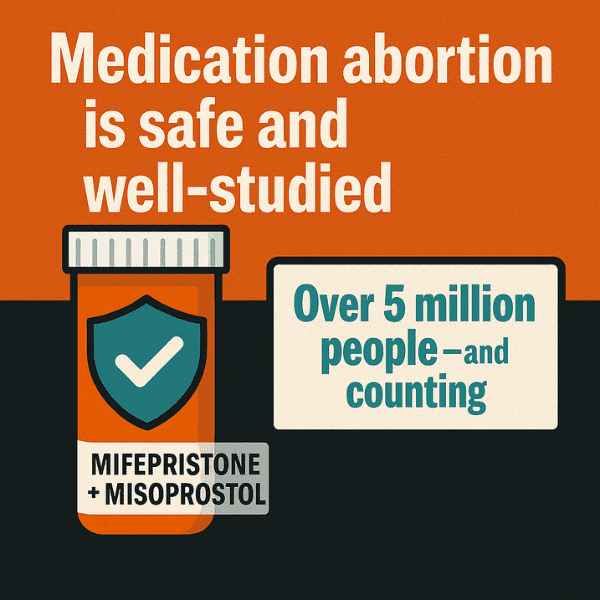
- The FDA approved mifepristone in 2000 after extensive clinical trials. Since then, more than 5 million people in the U.S. have used it safely.
- Major studies show medication abortion has a success rate of over 95% and serious complications occur in less than half a percent of cases.
- The American College of Obstetricians and Gynecologists (ACOG) confirms that mifepristone and misoprostol are “safe, effective, and evidence-based” methods of abortion.
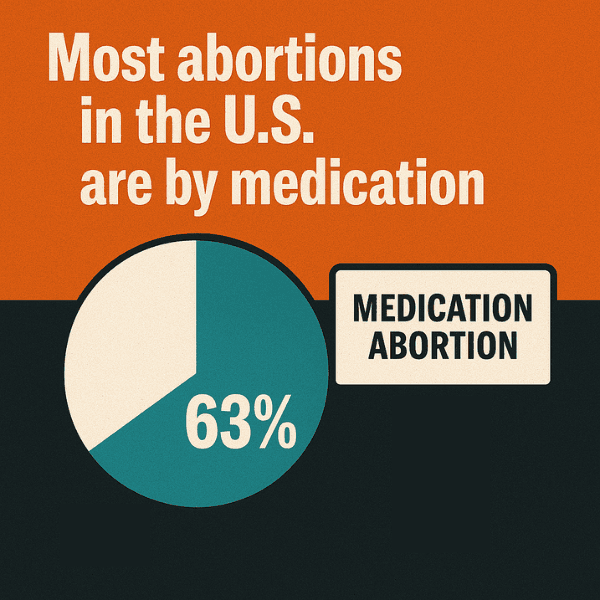
- In 2023, medication abortion accounted for 63% of all abortions in the formal health care system.
- Telehealth and mail-order provision have expanded rapidly, especially since the FDA permanently lifted the in-person dispensing requirement in 2021. For many, this is now the most accessible option.
- Anti-abortion groups are challenging the FDA’s long-standing approval of mifepristone through junk science, federal lawsuits, and lobbying.
- The 2024 Supreme Court case FDA v. Alliance for Hippocratic Medicine was dismissed for lack of standing, leaving the drug legal—for now.
- Even with that ruling, state-level bans and restrictions continue to limit patients’ ability to access pills through clinics, pharmacies, or the mail.
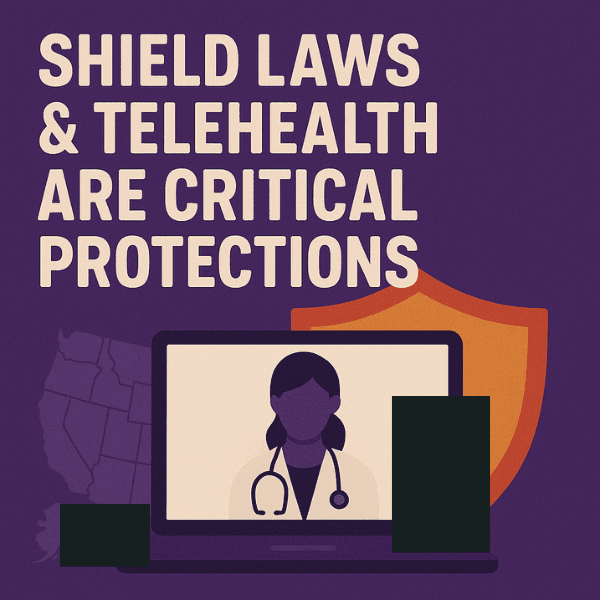
- In response to state bans, at least a dozen states have passed “shield laws” to protect clinicians who provide abortion pills via telehealth to patients in restrictive states.
- These protections matter: a 2024 study found nearly 20% of all abortions nationwide were provided through telehealth.
- Without such protections, providers risk lawsuits, and patients risk losing access altogether.
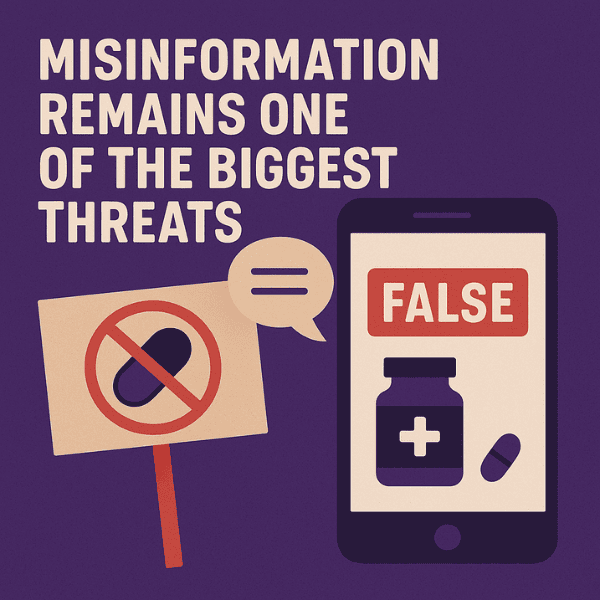
- Anti-abortion centers and political campaigns spread myths about medication abortion causing infertility, cancer, or mental health issues—all of which are scientifically false.
- False claims about “abortion reversal” also circulate widely, despite having no credible scientific evidence. Major medical associations warn that so-called “reversal” procedures are unethical and unsafe.
- Disinformation spreads online—especially on TikTok, YouTube, and Facebook—where studies show abortion-related misinformation is common and platform labels often fail to correct beliefs; reporting also finds Meta has allowed anti-abortion disinformation ads while restricting legitimate health information.
Why These Facts Matter Right Now
For North Carolina, the stakes are even higher. Our state has become a critical access point in the South, with nearly 40% of patients in 2024 traveling here from out of state. At the same time, North Carolina faces some of the steepest barriers: mandatory waiting periods, ultrasound requirements, and a political landscape hostile to reproductive freedom. Add to that the fact that anti-abortion centers outnumber real clinics nearly 7 to 1, and you can see how fragile access already is.
If federal attacks succeed in limiting or banning medication abortion, the effects will hit hardest in the Southeast—where geography, poverty, and politics already push care out of reach for so many. That means:
- Fewer safe options for people seeking early abortion.
- Overloaded clinics are forced to stretch already scarce capacity.
- Greater risks for patients in rural areas or with limited means to travel.
- Deepened inequities for Black, Brown, low-income, immigrant, and LGBTQ+ communities, who already face disproportionate barriers.
This is why telling the truth about medication abortion matters. Facts are a shield against fear and misinformation—and in this moment, spreading the truth is one of the most powerful ways to defend care in North Carolina and across the South.
What You Can Do
- Know the truth. Stay informed and share accurate information in your networks to counter the myths.
- Support providers. Back organizations and shield laws that protect telehealth and clinic-based care.
- Push back politically. Contact lawmakers and demand they protect access to evidence-based care.
- Become a digital amplifier. Use your social platforms to spread facts, call out disinformation, and ensure the truth reaches beyond our immediate circles.
- Fund the fight. Donate to organizations defending reproductive freedom in North Carolina and across the South.